Databases of facial images, addresses and photos contain sensitive information about individuals, which can be vulnerable to exploitation and data breaches. Cybercriminals and malicious actors could hack this database and gain access to facial recognition data for identity theft, stalking, deepfakes, robbery, harassment, impersonation and online scamming. Since faces cannot be encrypted to keep them secure like other types of data, they remain unprotected and AI makes it convenient to capture facial images to link them to individuals. This democratization of personal data collection undermines individual privacy and freedom in society.
The Problems
Identifying the concerns surrounding Artificial Intelligence
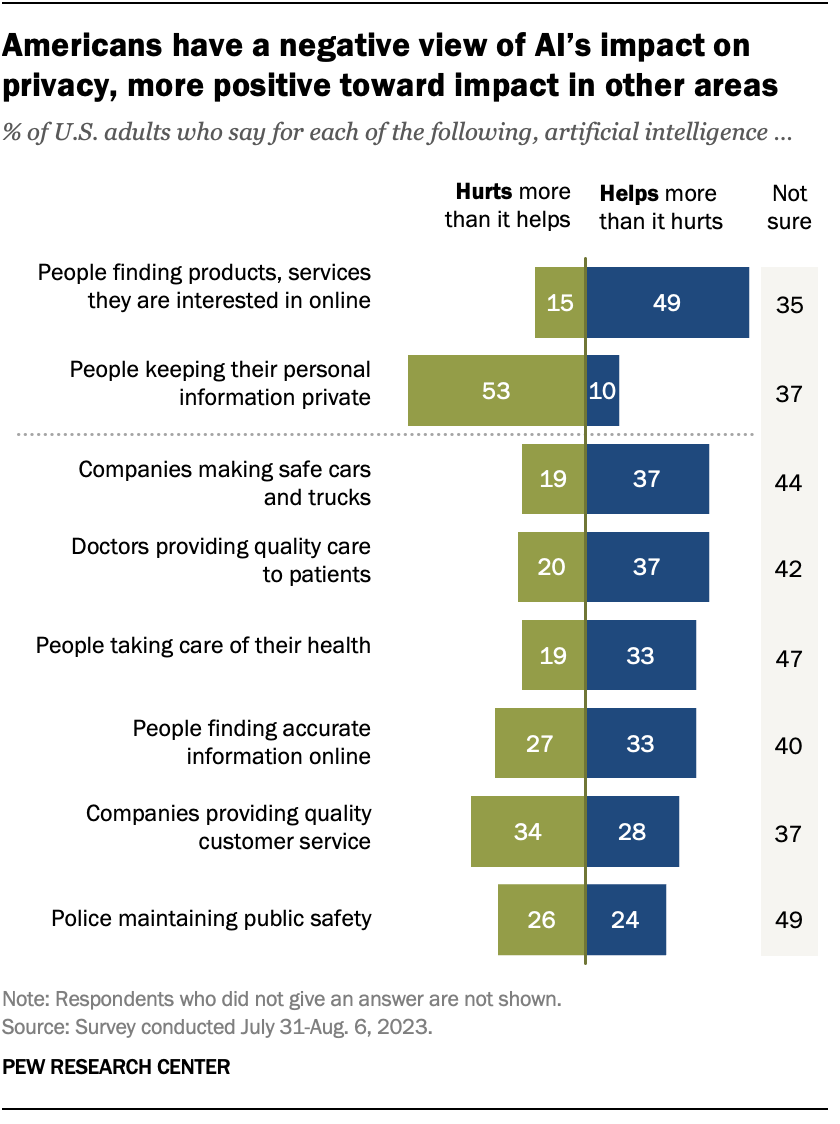
Data privacy concerns have become increasingly prevalent due to the advancement of generative artificial
intelligence. AI systems often collect, process and store substantial amounts of personal information to
train their algorithms, improve performance and make predictions. This raises privacy concerns, particularly
concerning the usage of personal data. This personal data can be embedded in language models and cannot be
easily removed from the system. This presents a significant challenge as AI increases the risks of
inadvertently exploiting confidential information about individuals and allowing unauthorized access to
personal information. Databases of personal data fallen into the wrong hands of a cybercriminal could also
lead to identity theft, cyberbullying and harassment.
“As artificial intelligence evolves, it magnifies the ability to use personal information in ways that can intrude on privacy interests by raising analysis of personal information to new levels of power and speed.”
- The Brookings Institution’s Artificial Intelligence and Emerging Technology (AIET)
The Dangers of Technology
In particular, one application of artificial intelligence algorithms includes facial recognition
technology, which can exacerbate privacy issues due to the lack of consent and transparency regarding
the usage of these systems. Machine learning has evolved to capture individual facial features to verify or locate
their identity in databases, leading to many ethical and legal privacy concerns about individuals being
tracked and identified without their knowledge or consent. From unlocking an iPhone to using filters on
Snapchat, facial recognition systems are prevalent in society today, and can be intrusive and invasive when
used for exploiting and tracking people. Explore some examples and implications of how artificial intelligence
systems can negatively impact society.
One third of facial recognition mistakes happen when attempting to identify women of colour.
Privacy Concerns Relating to Facial Recognition Technology
-
-
Facial recognition is prone to inherent judgemental bias and prejudice against marginalized groups, especially women and people of colour, due to biased training data and programming. As a result, people can be misidentified, convicted and wrongly accused of committing crimes — which can significantly alter their lives, create long-term psychological trauma and ruin their self-worth and reputation. Authoritative regimes can also abuse this technology to detect and target ethnic minorities. For example, China’s Huawei developed facial recognition software to identify and report Uighurs to government officials. This misuse of AI demonstrates how misidentification and inherent biases in technology systems can harm society’s most vulnerable groups and enable authoritative regimes to invade privacy and commit genocide and acts of violence.
-
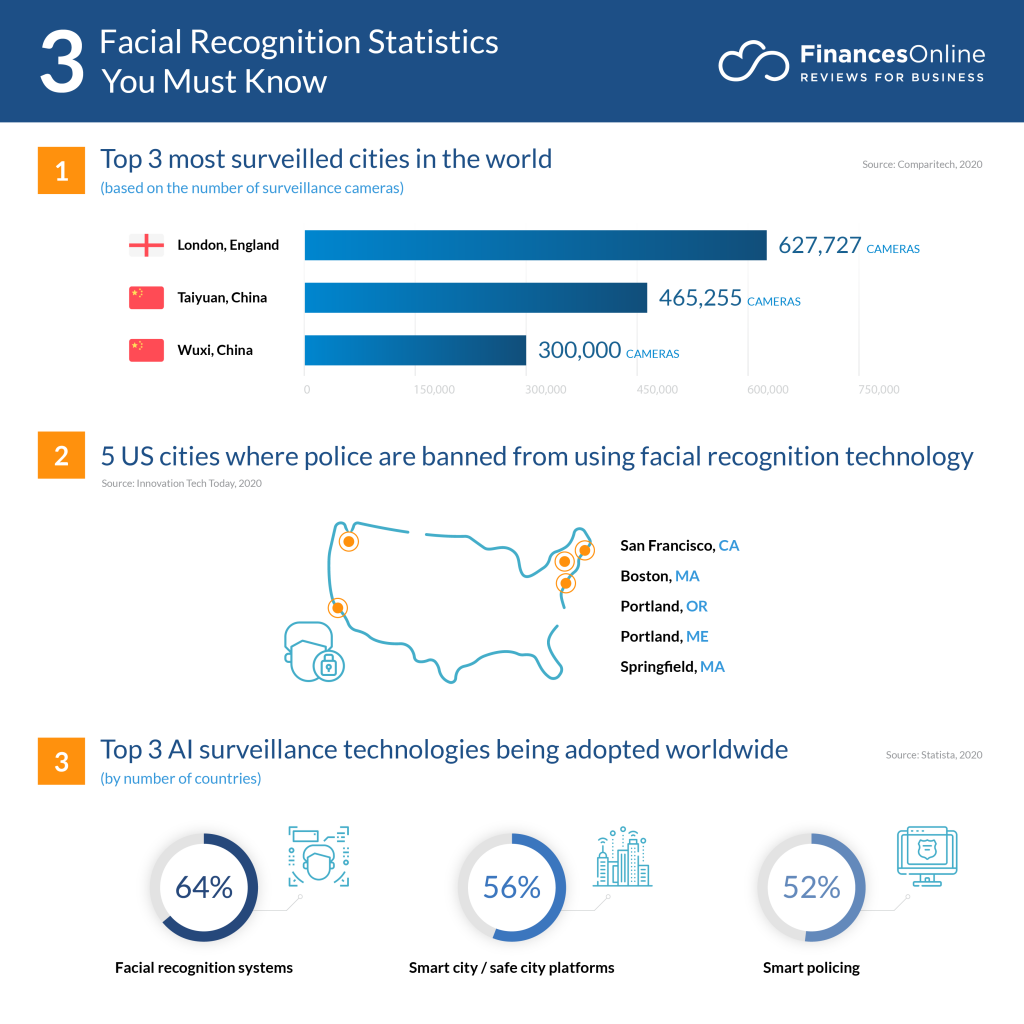
Facial recognition and AI systems are an evident infringement of personal privacy, expression and freedom. The thought of being monitored and surveilled can cause negative psychological effects, emotional stress and erode trust between people and the social fabric. People will feel discouraged and unmotivated from political activism due to their lack of privacy. For example, AI is used for mass surveillance and population control in demonstrations and protests, especially in totalitarian countries. During 2020, the San Francisco Police Department accessed over 400 cameras to spy on protestors, exemplifying that technologies can often be manipulated to restrict people’s freedom of speech and expression and right to anonymity.
Real World Example
ChatGPT and Associated Privacy Risks
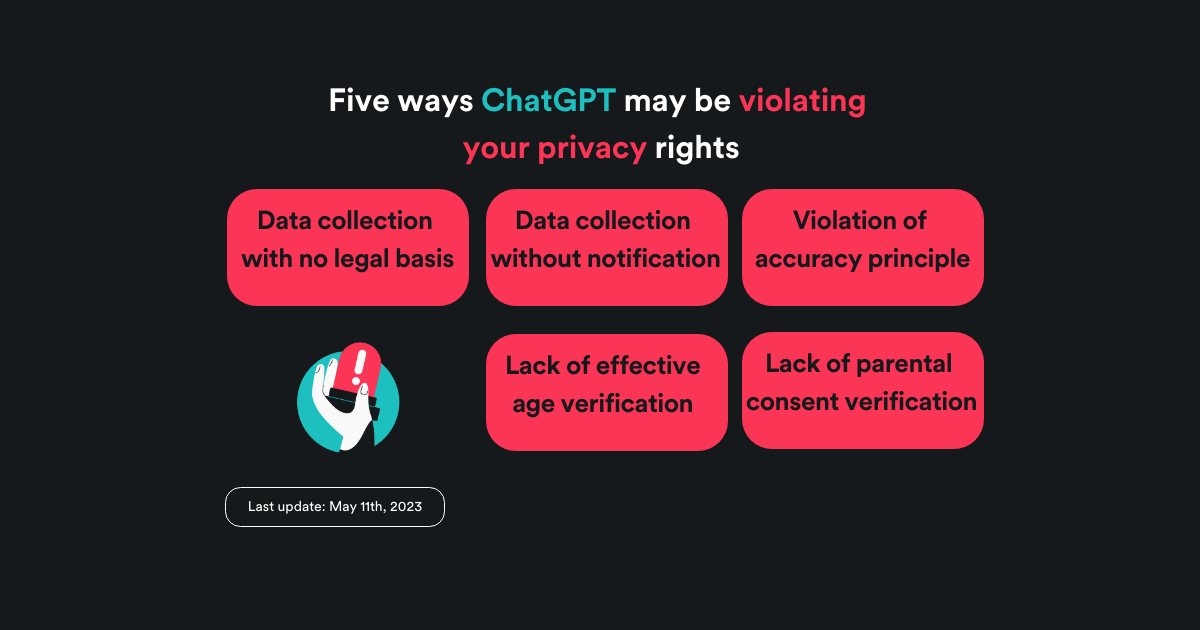
ChatGPT is a popular language processing tool capable of holding conversations based on user prompts, and it entails significant implications for user privacy. ChatGPT is not confidential since it collects, stores and uses all personal information, prompts, chat history and messages with the user to train its model as stated in their privacy policy. This collection of identifier data poses many security and privacy risks for users in cases of potential data breaches and violations.
ChatGPT Privacy Policy Statements
Discover How Artificial Intelligence Can Use Your Data
“(5) Who can view my conversations? As part of our commitment to safe and responsible AI, we review conversations to improve our systems and to ensure the content complies with our policies and safety requirements.”
“We collect information that alone or in combination with other information in our possession could be used to identify you (“Personal Information”)”
“(8) Can you delete specific prompts? No, we are not able to delete specific prompts from your history. Please don't share any sensitive information in your conversations.”
TIPS TO SAFEGUARD PRIVACY
- Anti recognition makeup / Face covering or masks
- Consider wearing a mask in locations where facial recognition is being used
- Opt out of facial scans
- You have a choice in opting out of facial recognition scans at airports and other institutions
- Limit posting and tagging on social media
- Every social media profile creates a risk for privacy breaches. For example, Clearview AI created a facial recognition app to view all public pictures of a person on social media.
- Be aware of smart home devices
- Google Nest Hub Max has a built-in Face Match technology that allows you to unlock your smart home device with your face. Face Match scans your environment and faces to display personalized content to each person. It’s advised to turn off this feature.
- Don’t share confidential personal information with AI chatbots, algorithms or forums